Table of Content
Over recent times, the economy of Canada has been slowly growing and stabilizing leading to the strengthening of its currency. Consequently, people moving to Canada with what were traditionally stronger currencies will have less money after changing the money. Contrary to other countries where house prices have been falling or remaining relatively stagnant, Canada’s house rates have been steadily growing alongside its economy.
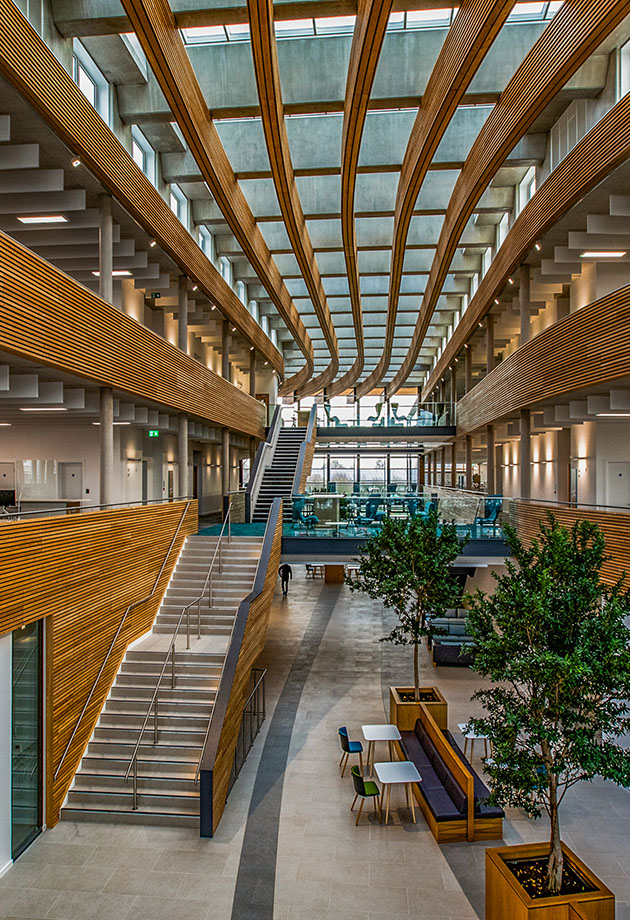
In New Brunswick, the benchmark price of a home in September 2021 was $262,200. The average income in the province is around $49,500, meaning the benchmark home price is about 5.2x the average income. Montreal is easily the most expensive city in Quebec due in part to being the second-most populous city in Canada.
Double trouble: A house in Canada now costs nearly twice what it does in the US
British Columbia and Ontario have traditionally been housing markets with prices above the Canadian average, but the BC market is set to cool in 2019. There are several reasons for this, including the foreign buyers tax, higher interest rates and more stringent mortgage qualification rules. Canadian mortgage rates have been rapidly rising as Canada’s inflation rate remains elevated at 6.9% as of October 2021. While inflation has been cooling off in recent months, largely due to aggressive rate hikes by the Bank of Canada, the Canadian housing market has also experienced an easing in home prices.

In fact, in these areas, a smart investor can make very good money on lower-priced homes. In Nova Scotia, the average price of a home in September 2021 was $356,757. The average income in Nova Scotia is around $48,400, meaning the average home price is about 7.3x the average income.
Other Real Estate Statistics
Since early 2020, Canadian home prices have surged 30%, an increase which is “nothing short of stunning,” economist Robert Hogue wrote for a recent Royal Bank of Canada report . Plexes are multi-story buildings with two to four individual units, usually one on each floor. Each unit is usually individually accessible via an external entrance with higher floors connected by staircases. Each province has their own regulatory board that sets regulations for and oversees the conduct of real estate agents in the province.

California's homeownership rate is the second-lowest in the nation and the lowest among states, with only 54.2% of residents owning their homes. The state is notorious for its high housing costs, especially in the San Francisco and Los Angeles areas. Perhaps in part due to these high costs, California also has the nation's highest level of homelessness. The typical home in the state costs $760,800 and is 1,625 square feet.
Median Sales Price of Houses Sold for the United States (MSPUS)
While the average Canadian home price is down 10% year-over-year, the performance of housing markets across the country has been mixed. Some areas continued to see declines in home prices and sales, while others experienced increases on a monthly basis. The most expensive housing prices in Alberta are in the city of Calgary with an average home price of $460,100 according to the Calgary real estate board.

That could mean a whopping 12% average difference in median prices between Q1 of 2022 and Q1 2023. Notably, housing prices were lower in the cities of Quebec, Winnipeg, Edmonton, and Montreal. Home prices in Canada tend to be most affordable in the eastern provinces and the prairie provinces. Below is a list of average housing prices in the 10 largest cities in the country.
In the pandemic-linked housing boom, average residential property values have become decoupled from average incomes over vast swathes of the country. The homeownership rate is also among the highest in the nation, at 74.8%. However, Mississippi also has the nation's highest poverty rate, with a fifth of its inhabitants living below the poverty line.
The average income in British Columbia is around $53,400, meaning the price of a home is about 17x the average income. According to data from the Canadian Real Estate Association , the average home price in Canada from September of 2021 was $686,650. Other than to say this price was up over 13% from last year, this statistic is not highly useful for home buyers.
Saskatoon, Saskatchewan's other major city and the province's largest, is comparable in price to Regina, though homes were marginally cheaper on average. In Saskatchewan, the benchmark home price in September 2021 was $286,600. The average income in Saskatchewan is around $54,300, meaning the benchmark price of a home is about 5x the average income. The least expensive homes in Saskatchewan are in the areas of North Battleford and Melville with prices well below $200,000.
Homeownership in the state is slightly higher than the national average, with 66.5% of residents owning their homes. Massachusetts offers one of the nation's highest qualities of living and some of its best education. A typical home in the state costs $559,312, with an average size of 1,744 square feet. Homeownership is among the lowest in the country, with 60% of residents owning their homes. The District of Columbia has the country's third-highest home prices and its lowest homeownership rate.
Canada's index score in the first quarter of 2022 amounted to 150.5, which means that house price growth has outpaced income growth by almost 51 percent since 2015. Along with Vancouver, Toronto is one of the largest real estate markets in Canada. The average price for a home in Toronto was $1,136,280, making it the second most expensive city in the country. Toronto is Canada's largest city and draws a lot of domestic and international attention, thus commanding high prices for real estate. We will also include a figure for average household income as a way to see how affordability stacks up across provinces. The greater the ratio between the average home and the average household income, the less affordable the housing market is.


No comments:
Post a Comment